Foam waste is an unavoidable byproduct of mattress manufacturing. Every cutting operation generates scraps, and every production run produces rejected pieces that cannot be used in finished mattresses. While some factories dispose of this waste in landfills, forward-thinking manufacturers are turning foam waste into a valuable resource through size reduction and recycling technologies.
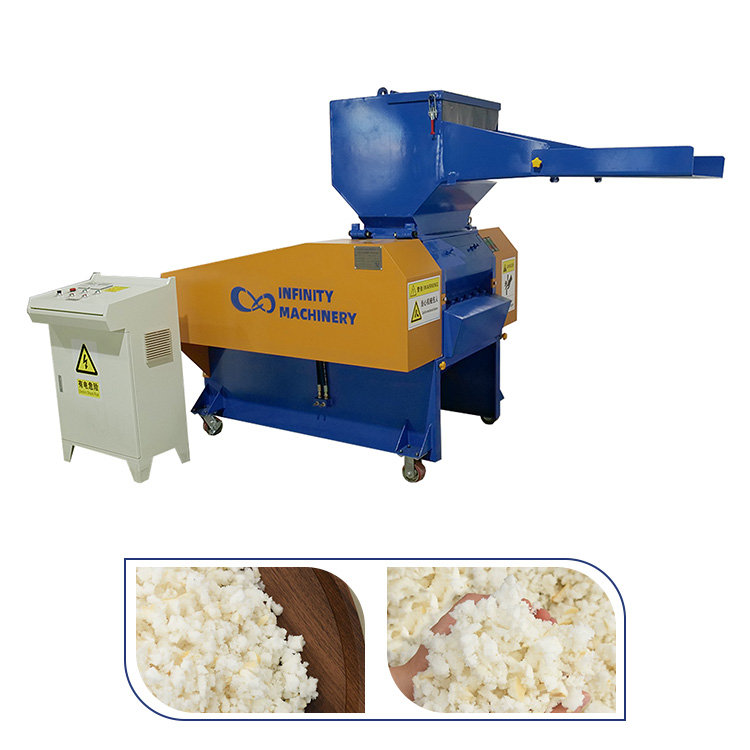
The IF-FFS3 Crushing Foam Machine is a dedicated foam size reduction machine that processes foam waste into uniform chips suitable for recycling, rebonding, or disposal. When used in combination with the IF-FZS Re-Bonding Foam Machine, it creates a complete foam recycling system that transforms waste into valuable new products. This guide explores the IF-FFS3's capabilities, applications, and financial benefits.
Foam waste comes in many forms within a mattress factory: edge trimmings from horizontal cutters, contour cutout waste from CNC machines, reject sheets from quality control, and scrap from prototype runs and pattern changes. This waste occupies significant space, costs money to dispose of, and represents a lost opportunity to recover material value. In many regions, foam waste disposal is becoming increasingly expensive and regulated, with landfill bans on polyurethane foam in effect in several jurisdictions.
The IF-FFS3 Crushing Foam Machine addresses these foam waste challenges effectively and efficiently by reducing foam waste to uniform chips that can be repurposed for a variety of applications. The crushing process reduces the volume of foam waste by approximately 10:1, dramatically reducing storage space requirements and disposal costs. The chips can be used as fill material for bean bags, pet beds, and cushion products, or processed through the IF-FZS rebonding machine to create new foam blocks for industrial applications.
The IF-FFS3 features a heavy-duty crushing mechanism with hardened steel blades that can process all common mattress foam types including polyurethane, memory foam, latex, and high-resilience foam. The machine accepts foam pieces up to 500mm in any dimension and reduces them to uniform chips of 5-20mm. The chip size is adjustable through interchangeable screen plates, allowing operators to produce different chip sizes for different applications.
Operation is straightforward: foam waste is fed into the hopper, where the crushing mechanism pulls the material through rotating blades that cut it into small chips. The chips pass through a screen plate that controls the maximum chip size, then exit the machine into a collection bin or conveyor. The machine operates at 300 kg per hour, processing a typical day's foam waste in 2-3 hours of operation.
The IF-FFS3 and IF-FZS Re-Bonding Foam Machine create a complete foam recycling system. The IF-FFS3 reduces foam waste to chips, and the IF-FZS mixes those chips with binding adhesive and compresses them into solid re-bonded foam blocks. Together, these machines transform what was previously waste disposal cost into a revenue-generating recycling operation.
For factories that already own the IF-FZS, adding the IF-FFS3 completes the recycling system and provides a consistent supply of foam chips for the rebonding process. Without the IF-FFS3, foam waste must be manually cut or shredded before it can be used in the IF-FZS, which is labor-intensive and produces inconsistent chip sizes that affect rebonded foam quality.
Crushed foam chips have a wide range of commercial applications beyond rebonded block production. The most common use is as filling material for bean bag chairs, floor cushions, and pet beds. Many factories sell their crushed foam directly to bean bag manufacturers at $0.50-1.00 per kg, generating a direct revenue stream from what was previously waste. Other applications include cushion fill for furniture, insulation material for packaging, and aggregate for rebonded foam products.
We have found that developing relationships with local buyers for crushed foam is essential to maximizing the financial return from the IF-FFS3. Bean bag manufacturers, pet product companies, and furniture cushion producers are potential buyers who value consistent-quality crushed foam at a discount to virgin foam prices. By selling crushed foam directly to these buyers, factories can generate $1,000-3,000 per month in additional revenue, depending on their foam waste volume and local market conditions.
| Processing Capacity | 300 kg/hour |
| Volume Reduction | Approximately 10:1 |
| Chip Size Range | 5-20mm (adjustable) |
| Material Types | PU foam, memory foam, latex, HR foam |
| Max Input Size | 500mm in any dimension |
| Power | Standard industrial three-phase |
The IF-FFS3 is designed for reliable operation with minimal maintenance requirements. Daily maintenance consists of cleaning the crushing chamber and checking blade condition. The hardened steel blades typically require sharpening or replacement every 200-300 operating hours, depending on foam type and volume. Blade replacement takes approximately 30 minutes and can be performed by the operator without specialized tools. The machine's drive system uses sealed bearings that require annual inspection.
Operator training is straightforward, with most operators reaching full productivity within one day. The machine's safety features include automatic shutoff when the hopper cover is opened, emergency stop buttons at multiple locations, and overload protection that prevents damage from foreign objects. We recommend designating one trained operator for the IF-FFS3 to maintain consistency in chip quality and monitor blade condition effectively.
The IF-FFS3 is priced at approximately $12,000. For a factory generating 500-1,000 kg of foam waste per month, the payback period is typically 4-8 months depending on local disposal costs and crushed foam market prices. The financial benefits come from three sources: elimination of waste disposal costs (typically $100-300 per month), revenue from crushed foam sales ($500-2,000 per month), and feed stock preparation for the IF-FZS rebonding system if installed.
When combined with the IF-FZS rebonding machine, the total investment for a complete recycling system is approximately $57,000 (IF-FFS3 at $12,000 plus IF-FZS at $45,000). This combined system can generate $4,000-6,000 per month in combined savings and revenue, providing a payback period of 10-14 months for the complete recycling system investment.
First, measure your foam waste volume before investing. A two-week waste audit will tell you if you generate enough waste to justify the IF-FFS3 investment. Second, identify potential buyers for crushed foam before purchasing the machine. Local bean bag manufacturers, pet product companies, and furniture cushion producers are the most likely customers.
Third, consider the IF-FFS3 and IF-FZS as a complete system rather than standalone purchases. The two machines work together to create a comprehensive recycling solution that maximizes the value recovered from foam waste. Fourth, separate foam types before crushing. Different foam types have different recycling values and applications, and mixed foam produces lower-quality crushed material. Fifth, store crushed foam in dry conditions to prevent moisture absorption that can affect quality and value.
The IF-FFS3 Crushing Foam Machine is an essential tool for mattress factories that want to reduce waste, lower disposal costs, and create new revenue streams from foam scrap. Its high capacity, adjustable chip size, and compatibility with the IF-FZS rebonding system make it a versatile addition to any factory's waste management operation.
For factories that already own the IF-FZS rebonding machine, adding the IF-FFS3 completes the recycling system and ensures a consistent supply of quality foam chips for rebonded block production. For factories new to foam recycling, the IF-FFS3 is an excellent entry point that delivers quick payback through reduced disposal costs and crushed foam sales. Contact Infinity Mattress Machinery today for a foam waste audit and equipment recommendation tailored to your specific production needs and waste volume.
Get a free foam waste audit and recycling equipment recommendation.