


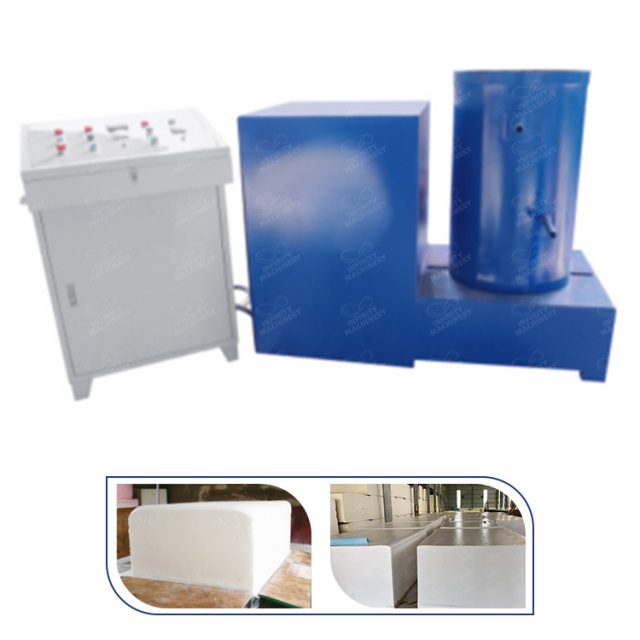
IF-FF2 · Manual batching
Manual batch mixer
For plants that weigh and load each batch manually. The mixer has a timer and a 15 kW power rating. Include the mould and handling time when estimating blocks per shift.
View IF-FF2 specifications


A batch PU foam machine produces one block per mould. A continuous slabstock line feeds foam along a conveyor for longer runs. Compare the machines below for the block sizes and output your mattress line needs each shift.
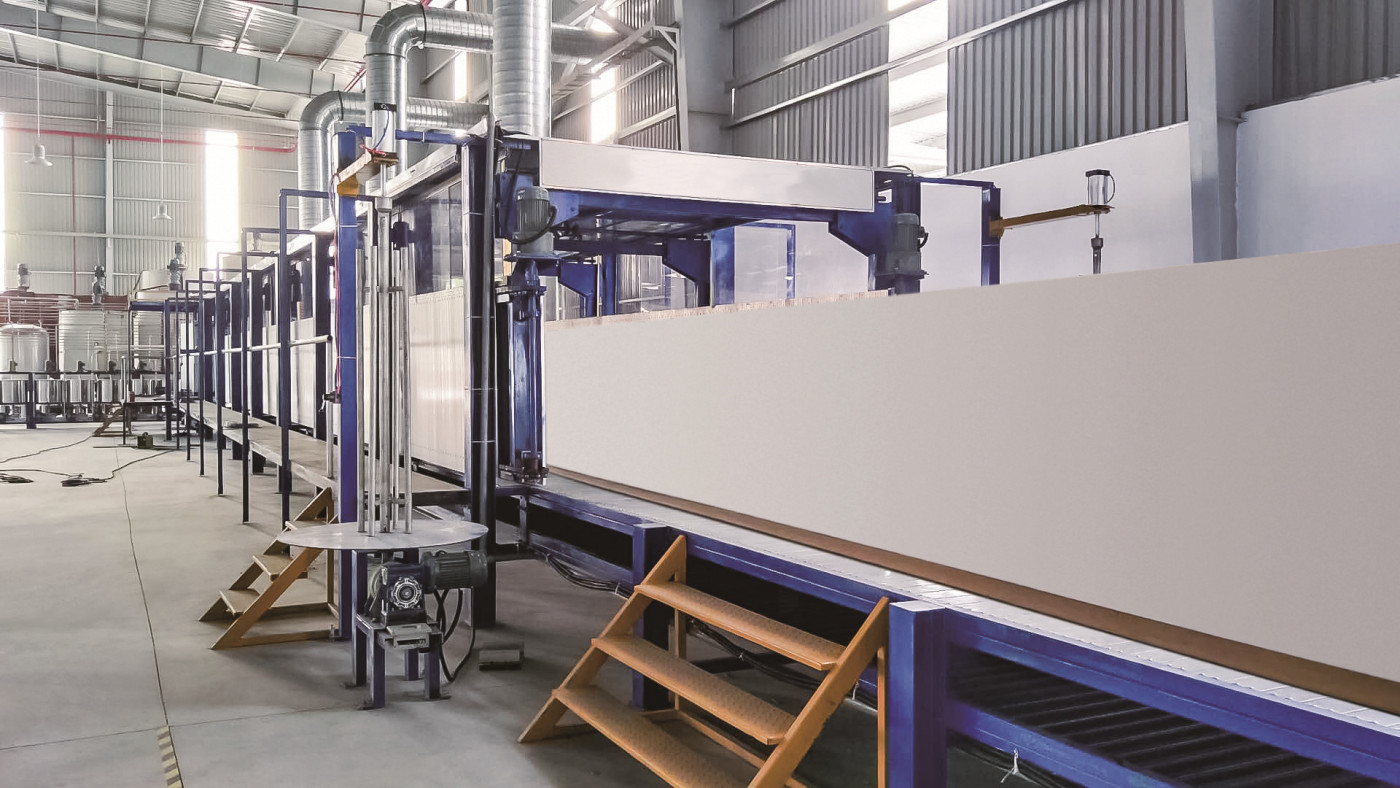
For plants that weigh and load each batch manually. The mixer has a timer and a 15 kW power rating. Include the mould and handling time when estimating blocks per shift.
View IF-FF2 specifications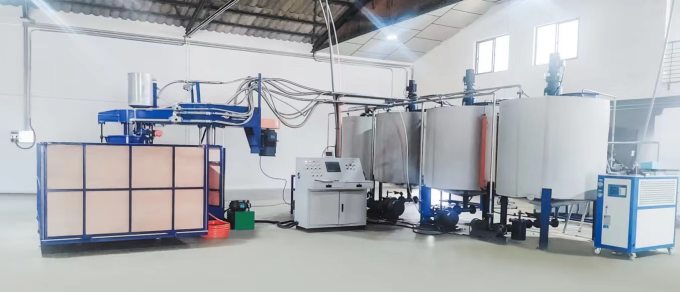
Choose a rectangular mould for blocks you will split into mattress layers, or a round mould for peeling into rolls. Specify the mould dimensions and the number of components to meter.
View IF-FF3 specifications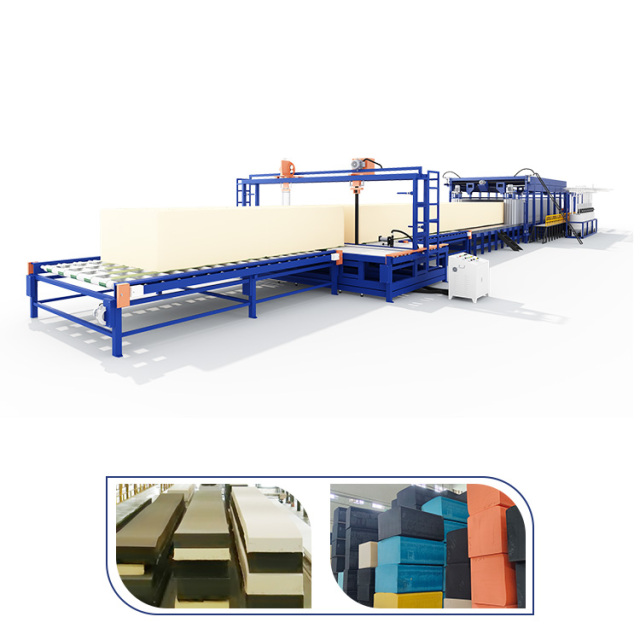
The conveyor carries the rising foam to a cross-cutter. The listed foaming width is 1,300–2,300 mm. Check your longest run, block storage space and cutter opening before selecting a width.
View IF-FF4 specificationsStart with the way each machine delivers foam. For a batch mixer, a buyer needs the actual charge and elapsed time per block. For a line that runs continuously, the useful figures are the block cross-section, running time and accepted length after trimming.
| Equipment | Published working data | Listed machine size (L × W × H) | What to settle on the quote |
|---|---|---|---|
| IF-FF2 manual mixer | 15 kW total power; mixing speed up to 3,000 rpm | 1.30 × 0.65 × 1.10 m | Mould dimensions, weighing arrangements and how the operator transfers each batch |
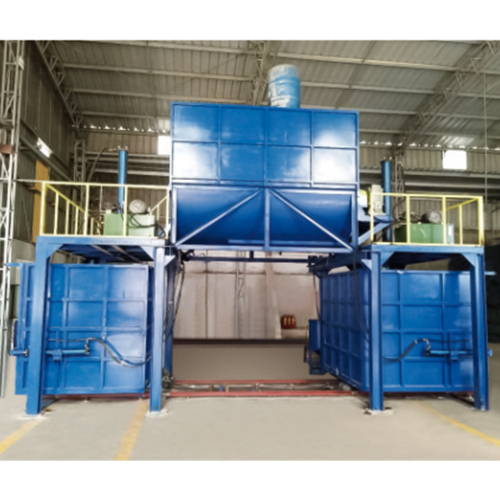
| IF-FF3 box foamer | 1,550–2,050 mm foaming width; rectangular or round mould options | 10.0 × 7.0 × 3.5 m | Mould set, metered components, tank sizes and time between successive pours |
| IF-FF4 continuous line | 1,300–2,300 mm foaming width; 2–8 m/min listed line speed | 35.0 × 4.5 × 4.2 m | Required block width and cut-off length, run length per grade, take-off and storage |
The FF2 dimensions describe the mixer. A buyer must also allow room for moulds, weighing and block removal. The FF3 and FF4 figures likewise describe equipment envelopes. Compare installed layouts only after each supplier has drawn the same boundaries.
Start with the material that actually arrives at your factory. A plant buying cured blocks has a different equipment list from one pouring liquid components, even if both sell the same mattress.
| What arrives and what you need | Equipment to shortlist | The question that decides it |
|---|---|---|
| Ingredients for short trials or small, separate batches | IF-FF2 manual mixer plus a suitable mould | How many complete weigh–mix–pour–reset cycles can your team finish in a shift? |
| Ingredients for repeat batches in rectangular or round blocks | IF-FF3 box foamer and a mould set for each required shape | Which moulds can be available for the next pour while the previous block is being handled? |
| Ingredients for sustained runs of one foam grade | IF-FF4 with cross-cutting and block take-off | Can storage and cutting accept the blocks from the longest planned run? |
| Cured rectangular blocks for flat comfort layers | IF-FPQ1 splitter or IF-FYP carousel for repeated batches | How many blocks share one cut schedule, and what is the largest incoming block? |
| Round blocks for a quilting line | IF-FYQ1 peeler, with IF-Z01 boring if a bore is needed | Will the finished roll fit the unwind stand in width, bore and outside diameter? |
| Clean production offcuts for rebonded blocks | IF-FFS3 crusher and IF-FZS steam rebonding equipment | Is there enough usable scrap of the agreed grade for the planned mould schedule? |
For a mixed order book, compare two actual weeks of work: one with long runs and one with frequent grade changes. Give the supplier the number of changeovers in each. A single average daily volume hides the time spent changing materials and moving blocks.
Measure the widest untrimmed block. A finished mattress can fit the cutting table even when the block it comes from is too wide to enter. For a 2,200 mm block, shortlist the IF-LT2450. The IF-LT1650 has a 1,650 mm opening.
| Long-track cutter | Maximum block width | Maximum block height |
|---|---|---|
| IF-LT1650 | 1,650 mm | 1,350 mm |
| IF-LT2450 | 2,450 mm | 1,350 mm |
These dimensions screen for physical fit. Give the supplier your foam grade, finished thickness and tolerance for a cutting trial.
Compare both long-track cutters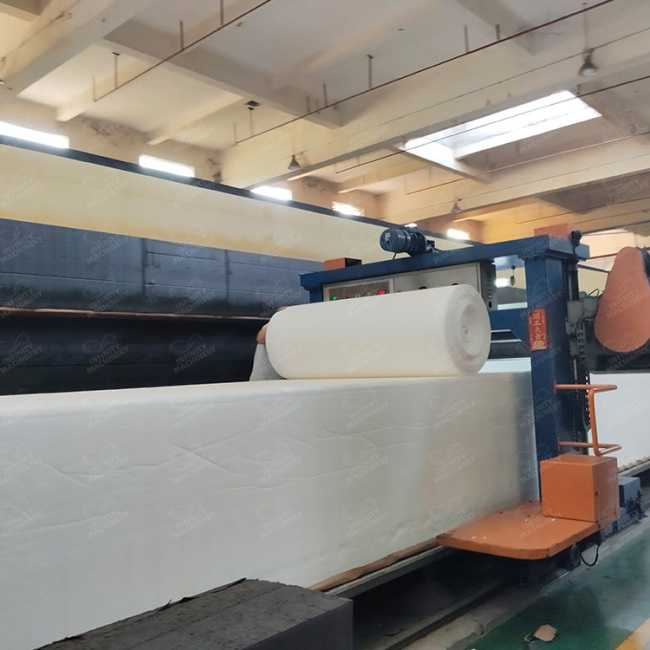
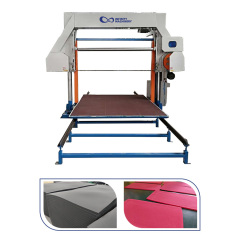
Split rectangular, cured blocks into sheets. For the IF-FPQ1 horizontal splitter, give the incoming width and the thinnest layer on your cutting list.
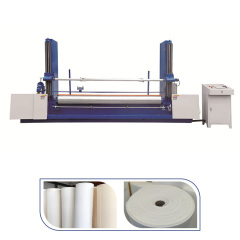
Peel a round block into a continuous sheet on the IF-FYQ1 foam peeler. Check the block’s centre bore and the roll diameter your quilting line can unwind.
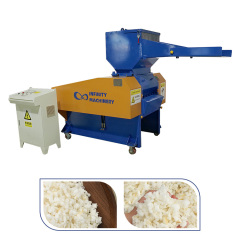
Start with the IF-FFS3 crusher for scrap and the IF-FZS1/2 steam rebonding machine for forming blocks. Weigh the available offcuts per shift before sizing either machine.
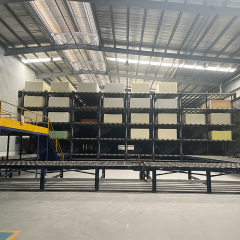
The IF-FS block storage system uses conveyors and lifts. Plan for the number of full-size blocks waiting between foaming and cutting, plus a route to the cutter.
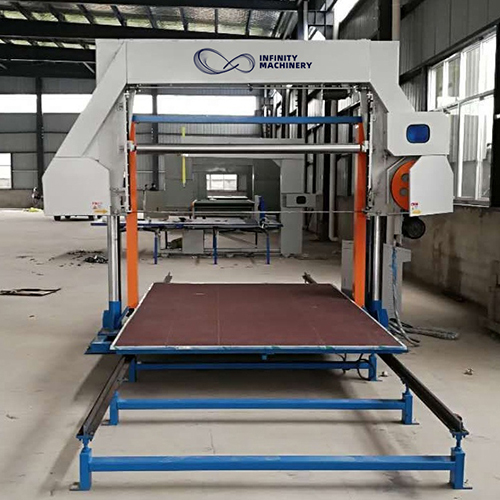
The IF-FPQ1-1650 and IF-FPQ1-2150 both list a 2–200 mm cutting thickness and a 1,200 mm block height. The smaller model accepts a block up to 2,000 mm long by 1,650 mm wide. The larger accepts up to 3,000 by 2,150 mm. Submit a cut list with your thinnest layer and tolerance. Thickness range alone cannot establish repeatability on your softest foam.
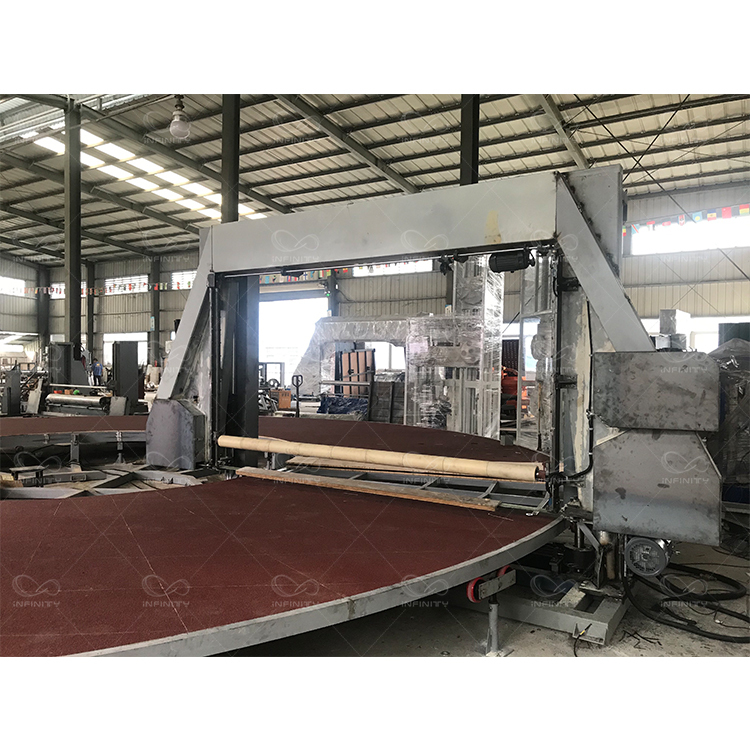
The IF-FYP carousel range carries several blocks around one cutting station. Published loading figures below use blocks measuring 2,000 × 1,500 × 1,200 mm. Keep loading access and the operator’s route outside the quoted machine envelope.
| Model | Blocks at the listed size | Table diameter | Machine length × width |
|---|---|---|---|
| IF-FYP6 | 4 | 6.0 m | 7.0 × 6.5 m |
| IF-FYP7 | 5 | 7.0 m | 7.5 × 7.0 m |
| IF-FYP10 | 8 | 10.5 m | 11.5 × 11.0 m |
All three list a 2–150 mm layer range. An eight-block table suits a buyer who can fill its positions with compatible orders. If the next blocks need different layer schedules, time a representative mix on both table types before paying for the extra floor area.
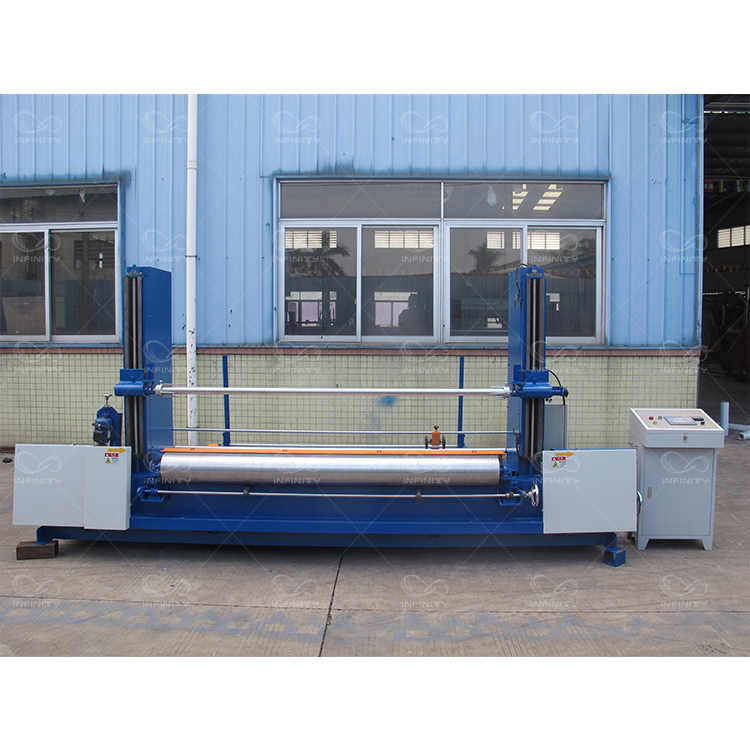
The IF-FYQ1 peels round foam into a continuous sheet 1–30 mm thick. The catalogue lists a block up to 2,000 mm in diameter and 2,150 mm wide. The matching IF-Z01 lists a 45 mm bore. A bore in the incoming block and the core required by the finished roll are two separate dimensions to put on the drawing.
For a repeating surface pattern, compare the IF-YX01/02 roller profiler against a sample of the finished surface. For a perimeter, slot or curved part, send the drawing to the CNC contour cutting team. A sample flat sheet answers neither of those shape questions.
Use the order quantity, the number of identical layers per mattress and the hours actually available for cutting. Exclude planned stops and changeovers from the time entered. Work through different layer sizes separately.
Worked example. A shift must supply 120 mattresses with two identical layers each. That is 240 accepted layers. Eight available cutting hours require 30 accepted layers per hour. If 90% of the layers cut pass inspection, plan for at least 267 attempts over the shift. The trial must show whether your selected machine and crew can sustain that rate.
For a foaming quote, convert the finished layers into volume as well. If all 240 measure 2.0 × 1.5 × 0.05 m, the order contains 36 m³ of finished foam. At an assumed density of 30 kg/m³, that is 1,080 kg in accepted layers. Add trim, rejected material and the grade mix separately. The finished mass is an order requirement; the foamer’s published liquid delivery rate uses different units.
Mark the discharge end of the foamer, the direction of travel and the longest block leaving it. Trace that block through every door, turn and transfer point to the cutter. On an IF-FF4 project, begin with the 35.0 × 4.5 m machine footprint and its 4.2 m listed height. Show columns, overhead restrictions and access for maintenance on the same drawing.
Count the blocks arriving between two cutting or transfer windows. For example, if a planning scenario releases three blocks per hour for four hours while the cutter is occupied, twelve block positions are needed before those blocks move on. This example sizes a queue. Your foam process and site team must establish when a block is ready for storage, cutting or packing.
For a long block, identify the pickup position, transfer direction, supported length and release point. Give these to the supplier of the IF-FC foam clamp or IF-FS storage system. Mark the path for removing a block if the next station stops. A layout is ready to compare when it shows how a full block enters, waits and leaves.
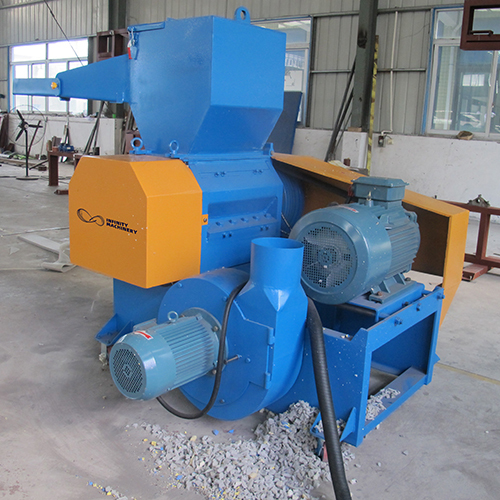
The IF-FFS3 crusher lists 500–1,200 kg/h and an 8–40 mm mesh range. These figures describe the crushing stage. The moulding stage has its own fill, steam, unload and reset cycle.
Worked example. A factory collects 1,200 kg of usable offcuts and has two hours available for crushing. Its target is 600 kg/h. This falls inside the listed crusher range. Ask for a timed sample run with your offcut mix and chosen mesh before sizing the rest of the cell.
The IF-FZS1 uses one mould and the IF-FZS2 uses two. Ask the supplier to state usable mass per mould, the time between accepted blocks and the steam supply included in the quote. Two moulds give the operator another position to schedule. The number of saleable blocks per shift still depends on the observed cycle.
Send a photo and weight breakdown of your scrap stream. Separate usable offcuts from material your product specification excludes. Keep a cured sample from the trial so the buyer can judge particle appearance and finished block quality against the intended application.
Attach an acceptance sheet to the quote before the trial. Use your foam grade and the most demanding size in your order book. Record loading, adjustment and unloading alongside the cutting time so both sides can reproduce the result.
| Trial | What to supply | What the signed record should contain |
|---|---|---|
| Batch foaming | Target grade, block dimensions, mould and an agreed sampling method | Complete batch cycle, usable block dimensions, sample identifiers and which party verifies density |
| Flat layers | A cured block, cut schedule and agreed thickness tolerance | Measurements at agreed positions across successive sheets, elapsed time, accepted count and rejects |
| Quilting rolls | Round block dimensions, required sheet thickness, width and roll limits | Start and end thickness readings, usable continuous length, winding condition and finished roll diameter |
| Rebonded blocks | Representative offcuts, agreed mesh and finished sample specification | Input mass, crushing window, mould cycle and number of accepted blocks after the agreed checks |
For a 10 mm comfort layer, agree in advance where thickness will be measured, how the foam will be supported and when readings will be taken. If two suppliers use different measuring conditions, ask for a repeat test under the same conditions before comparing their results.
Send every supplier the same output target, block or roll dimensions, foam grade, utilities and delivery destination. Ask each to identify included, optional and buyer-supplied items. This separates a machine-only offer from a line ready for the agreed trial.
| Quote line | Ask the supplier to itemise | Why it changes the decision |
|---|---|---|
| Foaming and moulds | Mixer, tanks, metering components, number and dimensions of moulds, controls | Another grade or block shape may need a different configuration or changeover time. |
| Handling and conversion | Cross-cutting, conveyors, block storage, cutters, blades and take-off | A line can make blocks faster than the next station can clear them. |
| Site and commissioning | Electrical connection, steam where required, installation responsibility, training and trial material | A local utility upgrade or missing handling device changes both cost and start date. |
| Shipping and service | Packing dimensions, delivery term and named place, freight, spare parts, warranty scope and response arrangements | These determine which costs reach the buyer and when production can resume after a stoppage. |
Use one currency, the same accounting period and the same cost items. If a trial shift costs $168 to run and produces 240 accepted layers, conversion costs $0.70 per accepted layer. A second trial costing $144 but yielding 180 accepted layers comes to $0.80. These are illustrative costs. Add raw foam, freight, financing or depreciation consistently if those belong in your purchase decision.
Request separate dates for drawing approval, configuration sign-off, factory trial, dispatch and site commissioning. Specify who supplies test material and signs the trial report. A dispatch date alone cannot tell a mattress factory when it can begin filling customer orders.
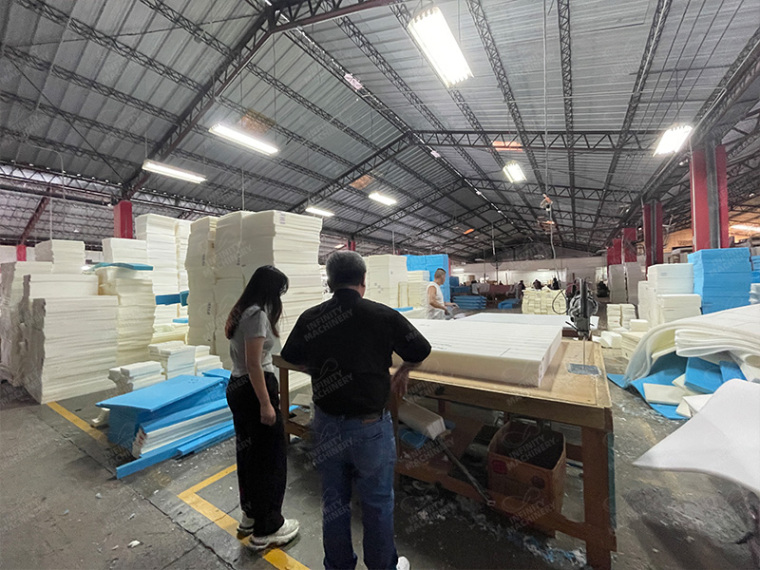
An existing mattress factory wanted to reduce manual handling and improve cutting precision. During a three-day site visit, Infinity’s team reviewed the installed machines, measured the available space and mapped how blocks moved through the workshop.
The factory had identified three concerns: manual operations, inconsistent cutting precision and a layout that made transfers difficult. Those concerns led to separate discussions about foaming automation, cutting equipment and where the machines could fit. The published visit describes the assessment and proposed layout.
For a similar retrofit, mark retained machines and door openings on the floor plan. Mark the current pickup and drop-off point for each full block. That gives the layout team two routes to compare before any equipment is moved.
Read the factory visit reportEnte Certificazione Macchine issued certificate 0P241223.GIMWC71 to Guangzhou Infinity Mattress Machinery on 23 December 2024. Annex I lists the IF-FF4/3/2/1 series. The certificate records a review of technical documentation. Ask for the manufacturer’s Declaration of Conformity for the exact model on your quotation.
Request the certificate and model annexThe KEYS certificate KEYS24031442001RH-03, dated 15 March 2024, covers the tested sample and refers to an accompanying test report. Ask for the model listing and matching report when your purchasing specification requires RoHS documentation.
Request the sample certificate and reportStart with the cutting operation. A horizontal splitter makes flat layers, a peeler makes rolls from round blocks, and a contour cutter follows a part drawing. Send the dimensions of the incoming block and one finished part.
Multiply mattresses per shift by the number of identical layers in each mattress. An order for 120 mattresses with two identical layers requires 240 usable layers. For an eight-hour cutting window, that is 30 accepted layers per hour. Record trim losses and rejected sheets separately.
The catalogue lists the machine itself at 35 m long, 4.5 m wide and 4.2 m high. Add the space needed for access, block take-off, storage and the route to the cutter. Send a dimensioned floor plan so the quotation can specify the installed layout.
Ask each supplier to quote the same block size, target density, batch schedule, mould set and metering configuration. Have tanks, installation, training and spare parts itemised so you can see what each price includes.
The IF-FF3 can be configured with rectangular or round moulds. Confirm which moulds and change parts the price covers. A rectangular block goes to splitting, while a round block intended for continuous sheet goes to peeling. Include the downstream machine and its loading limits on the same enquiry.
List the quantity in each width band. The occasional 2,200 mm untrimmed block exceeds the IF-LT1650 opening. Compare a wider cutter against a documented trimming or outsourcing plan for those orders. Include the extra handling time and lost material in that comparison.
Line speed measures travel per minute. Shipping capacity also depends on the block cross-section, grade changes, trimming, the layer cut list and the time available at the slowest station. Agree on an accepted-layer or accepted-block target for the trial.
For a wound quilting roll, give the outside diameter, width and desired packed size to the supplier of the IF-FCR3 roll compressor. For a flat stack, give its length, width and height to the supplier of the IF-FB02 flat press. Include the recovery condition your customer will accept after unpacking.
Name the exact model, options, destination and site power supply. Request a written price for that scope, the minimum order if applicable, and the dates for the factory trial and dispatch. A repeat model with a different mould, tank or control package may have a different schedule.
A dimensioned floor plan, marked utility points, doors and columns, a list of machines to retain, and the longest product to move between stations. A brief video following one block from arrival to packing can explain a transfer that a plan view misses.
Tell us what enters the line and what you need to ship. For a single machine, name the model or operation. For a complete line, attach a floor plan and an order that represents a typical shift.
