

1. The Physics of High-Rebound Latex Compression
Material ScienceNatural latex beds present a severe mechanical challenge due to their extreme density and instantaneous rebound characteristics. Manual packaging methods simply cannot exert the uniform, sustained pressure required to compress these premium materials without causing structural micro-tears. Relying on human labor for this phase results in inconsistent sizing, high injury rates, and a sluggish output that chokes the entire production line. By implementing heavy-duty automated compression systems, factories can instantly replace a team of struggling workers with a single, high-yield machine that perfectly compresses dense latex in seconds, drastically increasing units produced per hour and protecting profit margins.
Material Science
- Core Insight: High-density latex requires precise, uniform hydraulic or pneumatic pressure to prevent structural degradation during the compression phase.
- Technical Solution: Infinity's automated machinery applies calibrated, even pressure across the entire mattress surface, eliminating manual handling errors and ensuring perfect compression without material damage.
2. Eliminating Manual Bottlenecks in the Packaging Bay
Labor OptimizationThe packaging bay is historically the most labor-intensive zone in a mattress factory, especially when dealing with heavy latex products. Shifting these beds requires multiple operators, leading to skyrocketing payroll expenses and frequent workers' compensation claims. By transitioning to vacuum compression and automated rolling technology, plant managers can slash their packaging headcount by up to 80%. This transition from an inefficient manual past to a high-yield automated future means that beds move seamlessly from assembly to final package without human intervention, radically reducing overhead and directly increasing bottom-line profitability.
Production Efficiency
- Core Insight: Manual packaging of heavy latex mattresses creates severe bottlenecks that limit daily factory throughput and inflate labor costs.
- Technical Solution: Integrating automated roll-packing lines minimizes human touchpoints, allowing a single operator to oversee the packaging of hundreds of beds per shift, maximizing labor efficiency.
3. Edge Preparation for High-Tension Rolling
Process OptimizationBefore a heavy latex mattress can be successfully compressed and rolled, its edges must be flawlessly secured to withstand extreme tension. Weak or uneven manual tape edging will burst under the pressure of automated rolling, leading to costly material waste and rework. Upgrading to robotic tape edge machines ensures that every seam is reinforced with industrial precision, completely removing the human error associated with manual sewing. This high-speed automated preparation guarantees that the mattress will survive the rigorous roll-packing process, accelerating the entire workflow and safeguarding your raw material investments.
Machine Calibration
- Core Insight: High-tension rolling requires perfectly calibrated edge seams to prevent rupture during the vacuum and compression stages.
- Technical Solution: Utilizing advanced tape edge machinery with robotic arms ensures perfectly straight, high-strength sutures that endure maximum compression forces without failing.
Essential Machinery for Pre-Packing Edge Sealing
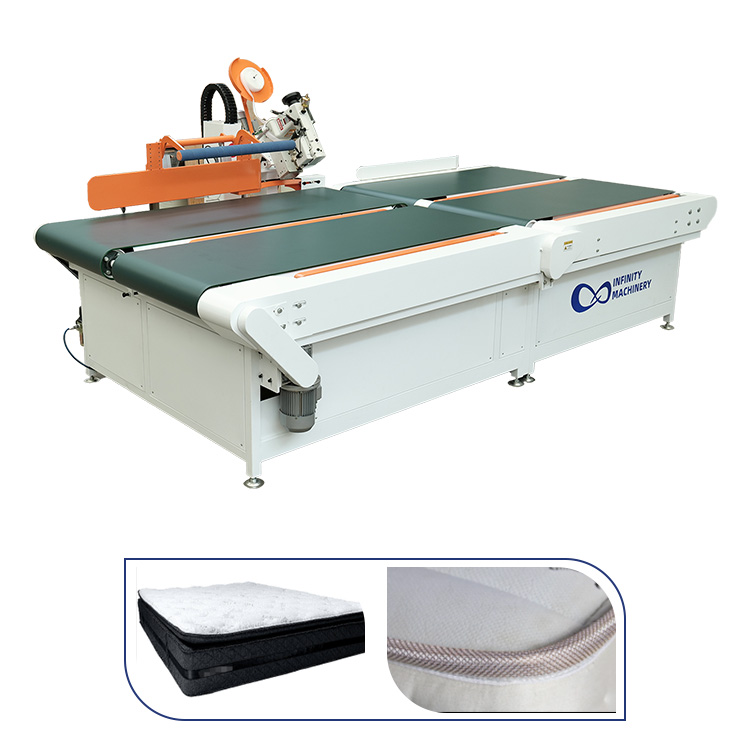
Features a robotic arm and PLC control to automatically rotate and flip heavy mattresses, drastically reducing labor intensity and ensuring perfect edge preparation for roll-packing.

An ergonomic powerhouse with automatic flipping and an advanced servo system, providing precise, high-speed sewing to secure latex mattress edges prior to heavy compression.
4. Preventing Micro-Tears During the Roll-Pack Phase
Quality ControlNatural latex is highly susceptible to micro-tearing if the rolling diameter is too tight or the rolling speed is inconsistent. Manual operators cannot maintain the exact torque required to roll a dense bed safely. Automated roll-packers utilize precise servo-driven rollers that adjust the rolling diameter based on the specific density and thickness of the latex. This engineering marvel ensures that consumer-end wellness benefits, such as orthopedic support and airflow, are preserved. By eliminating manual rolling errors, factories drastically reduce return rates and enhance brand reputation while maintaining peak production speeds.
Machine Calibration
- Core Insight: Inconsistent rolling torque degrades latex cell structures, compromising the final product's orthopedic support and lifespan.
- Technical Solution: Servo-controlled automated rollers adjust torque and speed in real-time, ensuring a perfect roll that protects material integrity and guarantees consumer comfort upon unboxing.
5. Throughput Metrics: Beds-Per-Hour Scaling
Production EfficiencyTo remain competitive, B2B manufacturers must focus relentlessly on beds-per-hour metrics. A manual packaging team might struggle to process 10 heavy latex beds an hour, bleeding profit with every passing minute. Conversely, an automated packaging line can seamlessly process upwards of 3-5 beds per minute. This exponential increase in throughput allows factory owners to fulfill massive wholesale orders in a fraction of the time. By replacing slow, exhausting manual labor with high-speed automation, facilities can scale their operations effortlessly, turning increased production volume into immediate revenue growth.
Production Efficiency
- Core Insight: Scaling production volume is impossible when the final packaging stage relies on physically exhausted manual laborers.
- Technical Solution: Automated machinery operates at continuous high speeds without fatigue, multiplying beds-per-hour output and dramatically lowering the cost-per-unit produced.
6. Logistics and Shipping Cost Reductions
Cost ControlThe ultimate goal of roll-packing is to minimize the volumetric footprint of the final product to slash shipping expenses. High-rebound latex beds that are improperly compressed take up excessive space in shipping containers, destroying profit margins on logistics alone. By utilizing a state-of-the-art compression roll-pack line, factories can reduce the volume of a mattress by up to 75%. This allows manufacturers to fit significantly more units into a single container. The transition from bulky manual packing to ultra-compact automated rolling directly translates to massive savings on freight, maximizing the overall profitability of the manufacturing operation.
Cost Control
- Core Insight: Maximizing container density is the most effective way to reduce exorbitant global shipping and warehousing costs.
- Technical Solution: High-efficiency automated roll-packers compress and seal mattresses to their absolute minimum safe volume, multiplying container capacity and slashing per-unit logistics costs.
Optimize Your Line with Infinity Automation

Automates panel preparation with a hidden blade design and conveyor feeding system, ensuring rapid, precise cuts to keep up with high-speed assembly and packing lines.
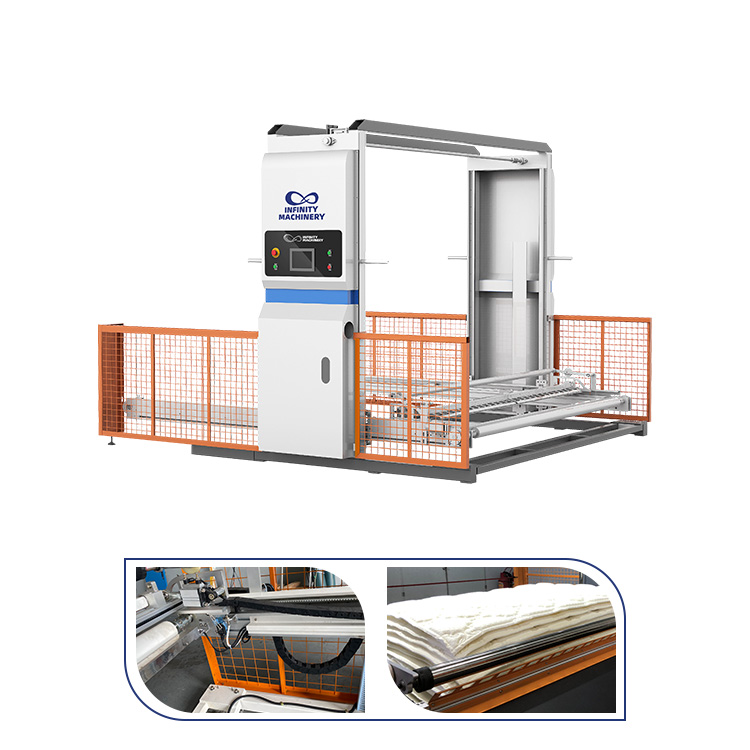
Eliminates manual material handling by automatically stacking quilted fabrics with full servo precision, feeding the assembly line faster and reducing labor headcount.
The Investor's Edge: Automation Equals Profit
The true secret to overcoming production hurdles and maximizing profit margins is replacing outdated, slow manual labor with automated, high-efficiency machinery. For heavy, high-rebound latex mattresses, automated roll-packing is not a luxury—it is a financial necessity. Infinity Mattress Machinery provides the industrial solutions required to upgrade your plant, exponentially increase output, and permanently reduce operational costs.
Ready to Revolutionize Your Mattress Production?
Contact Infinity Mattress Machinery today for a customized automation strategy that cuts labor costs and scales your factory's output.


